


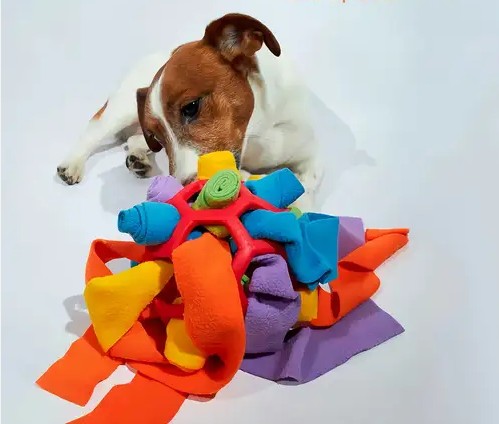
The Need to Chew
Dogs of all ages have an innate need to chew. Whether wild or domestic, dogs chew to keep their jaws strong and teeth clean. More importantly, they chew for fun, stimulation, and to relieve anxiety.
🛠️ How to Provide Meaningful Enrichment
One of the first things new owners do is buy a mountain of toys. However, toys only provide half of what your dog truly craves: quality interaction with you.
♻️ Think Outside the (Recycling) Box
You don’t need a huge budget to start. Your yellow recycling bin is a goldmine for enrichment!
- Cardboard Boxes & Toilet Rolls: Great for "shredding" or hiding treats inside.
- Plastic Bottles: Remove the plastic neck rings first, then hide kibble inside for a DIY food dispenser.
- Make them work for it: Use food puzzles, treasure hunts, scatter feeding, or frozen treats to engage their brain during mealtimes.
🌟 The 6 Types of Enrichment
To truly improve your dog's psychological and physical well-being, try to experiment with these six different categories:
1. Social Enrichment
Creating positive experiences with others.
- Examples: Supervised playdates, small playgroups, or trips to the beach, creek, or park.
2. Cognitive Enrichment
Giving your dog a "problem" to solve.
- Examples: Training new skills, puzzle toys, and games of hide-and-seek.
3. Physical Enrichment
Providing a variety of movement and textures.
- Examples: Digging pits, tunnels, walking on different surfaces, or going for a swim.
4. Sensory Enrichment
Engaging their nose, eyes, and ears.
- Examples: Scent work ("sniffaris"), bubbles, wind chimes, or exposing them to safe new smells like herbs, spices, or even farm animal scents.
5. Feeding Enrichment
Moving away from the standard food bowl.
- Examples: Lick mats, snuffle mats, flavoured ice cubes, or using "treasure hunts" around the yard for their dinner.
6. Toy Enrichment
Encouraging chase and play instincts.
- Examples: Flirt poles, stuffing a "Hol-ee Roller" ball with fabric strips, or wrapping an old towel around something smelly (like seaweed or bark) for them to investigate.
The Key to Success
Every dog is an individual. The secret to a successful enrichment programme is to experiment. Observe your dog to see what they find most rewarding—whether they are a "sniffer," a "shredder," or a "chaser"—and tailor their daily life to match!


